Gateway Lines / Ocean freight, simplified
From factory floor to your door.
One team for the whole journey. Every shipment in view.
Inside the story
01 In plain English
What Gateway Lines is
If you buy goods from overseas, someone has to get them onto a ship, through customs, and onto a truck to your warehouse. That is what we do.
Gateway Lines is a licensed NVOCC, which means we act as the carrier without owning the vessels. We buy space on container ships in volume, resell it, and issue our own bills of lading. You get one company accountable for the whole move instead of a chain of brokers handing your cargo along.
A shipment looks like this. You tell us what you are importing and from where. We quote a rate, book the space, arrange pickup at the origin, move the container across the ocean, clear it through US Customs, and truck it to your door. The whole time, you can see where it is.
Most forwarders either charge for software or send you a spreadsheet. Our platform is free to customers and we make our money on the freight itself. Booking, satellite tracking, customs filing, documents, invoices, cargo insurance, duty calculation and emissions reporting all live behind one login.
Direct carrier contracts
We buy space directly from carriers like MSC, Maersk, CMA CGM, COSCO, Hapag-Lloyd, and others. No middlemen between you and the ship.
Satellite tracking
Every container tracked via orbital AIS, not carrier EDI. You see where your cargo is in real time, with predictive ETAs powered by vessel speed and weather data.
Automated operations
Booking, documentation, customs filing, invoice generation, all automated. What takes most forwarders days takes our system hours.
FMC licensed NVOCC
Federally licensed to operate as a Non-Vessel Operating Common Carrier. We issue our own bills of lading and take full responsibility for your cargo.
Integrated customs
Customs clearance built into your Gateway dashboard and filed by our licensed customs broker partners. ISF, entry, duty calculation, and compliance, managed in one place.
Door-to-door capability
Origin pickup, ocean transport, customs clearance, drayage, final delivery. One platform, one point of contact, one invoice.
02 The relay
How a container gets from a factory to your door
Ocean freight is a relay. Eight parties can touch one box between a factory in Asia and a warehouse in the US, and most delays happen at the handoffs. Here is the whole relay, and who is responsible at each step.
Booking
You send us the cargo details and the date it will be ready. We confirm space on a sailing, issue the booking, and lock the rate.
Handled by Gateway.
Origin pickup
An empty container is pulled from the carrier's depot and trucked to the factory. The supplier loads and seals it. That seal number goes on every document from here on.
Handled by Gateway's origin agent. The supplier loads.
Export clearance and the origin port
The container is gated in at the origin terminal. Export customs is filed, and the shipping instructions that become the bill of lading go to the carrier.
Handled by Gateway and the origin agent.
The vessel
The box is loaded and sails. On the Shanghai to Long Beach lane that is 14 days on the water. You can watch the vessel's position the whole way in your portal.
Handled by The ocean carrier.
Shanghai to Long Beach, 40' high cube
From the board lane, read Sep 18, 2026
14 days port to port
Arrival and discharge
The vessel berths and the container is discharged to the terminal. It is released once the carrier's charges are settled and Customs has cleared it.
Handled by The terminal and the carrier.
Customs entry
The Importer Security Filing was already made before the container was loaded overseas. Now the entry is filed with US Customs, duties are calculated and paid, and the shipment is released or flagged for exam.
Handled by Gateway's licensed customs broker partners, on your behalf.
Drayage
A truck picks the container up from the terminal inside the free days, so no demurrage accrues, and moves it to your dock.
Handled by Gateway's drayage network.
Delivery and return
The container is unloaded at your warehouse and the empty goes back to the carrier's depot. Your invoice, documents and tracking history stay in the portal.
Handled by You unload. Gateway returns the empty.
03 The rules of the handoff
Incoterms, and who pays for what
An Incoterm is a three-letter rule published by the International Chamber of Commerce. For one sale, it says where the seller's job ends and the buyer's begins: who books the freight, who pays each leg, who carries the risk if the container goes into the sea, and who clears customs. There are eleven rules in Incoterms 2020. Importers meet six of them.
Two things travel along the chain: cost and risk. They do not always hand over at the same point, and that gap is where importers get surprised. The table shows the cost side.
| Rule | Export clearance | Origin trucking | Ocean freight | Cargo insurance | Import duty and entry | Delivery to your door |
|---|---|---|---|---|---|---|
| EXWEx WorksYou take over at the factory door. Maximum control, and you need an agent at the origin. | Buyer | Buyer | Buyer | Optional | Buyer | Buyer |
| FCAFree CarrierThe ICC's recommended rule for containers. The seller hands the box to your carrier at the named place, usually the origin terminal. | Seller | Seller | Buyer | Optional | Buyer | Buyer |
| FOBFree On BoardThe rule most Asian suppliers quote. Risk passes when the goods are on board the vessel. | Seller | Seller | Buyer | Optional | Buyer | Buyer |
| CIFCost, Insurance and FreightThe seller books the freight and buys minimum insurance. Risk still passes at loading, so the seller pays for a leg it no longer bears the risk on. | Seller | Seller | Seller | Seller | Buyer | Buyer |
| DAPDelivered at PlaceThe seller delivers to your named place. You clear customs and pay the duty, and you unload. | Seller | Seller | Seller | Optional | Buyer | Seller |
| DDPDelivered Duty PaidThe seller does everything, including US duty. Maximum convenience, minimum visibility. | Seller | Seller | Seller | Optional | Seller | Seller |
Incoterms only oblige insurance under CIF and CIP. Under every other rule it is whoever wants it. Origin trucking under FCA runs to the named place.
The DDP trap
DDP sounds like the easy button. The supplier quotes one price and the goods show up. The problem is what that price hides. Freight, duty and every fee are folded into the unit cost, so you cannot see what you paid for any of them, and you cannot shop the freight.
The bigger risk is the entry itself. US Customs holds the importer of record responsible for the declared value, the classification and the duty. Under a supplier's DDP, that entry is often made by a party you have never met, on a bond you do not control, with a declared value you never see. If that value is wrong, the shipment that gets held, examined or reassessed is yours, and you will not have the paperwork to argue with.
That is why we built Risk-Controlled DDP: door-to-door convenience with the entry filed in your name by a licensed broker, every cost line visible, and the duty estimated up front.
Which rule should you use? For a first container, FOB or FCA at the origin port gives you control of the freight without needing an agent at the factory. Use DDP only when the party quoting it will show you the entry.
What does DDP mean in shipping?
Delivered Duty Paid. The seller delivers the goods to the buyer's named place with import duty and all transport paid. It is the only Incoterm that puts import clearance and duty on the seller.
What is the difference between DDP and DAP?
Under DAP the seller delivers to your named place but you clear customs and pay the duty. Under DDP the seller also handles the entry and the duty. Everything else is the same.
What does FOB mean?
Free On Board. The seller clears export and loads the goods onto the vessel at the origin port. From that moment cost and risk are the buyer's. It is the rule most overseas suppliers quote, and it leaves the freight in the buyer's hands.
Which Incoterm should a first-time importer use?
FOB or FCA at the origin port. You control and can compare the ocean freight, the supplier handles the origin side it knows, and your own broker files the entry in your name. Use DDP only with a forwarder that shows you the entry.
04 Landed cost
What a container actually costs
Landed cost is the number that matters: the goods, plus the ocean freight, plus the duties, plus the fees Customs charges on every entry, plus the truck at the end. Three of those we can show you live.
Spot market rate, read Sep 18, 2026
Shanghai to Long Beach, 40' high cube
$8,612
Not a Gateway rate. Gateway quotes below spot for confirmed shipments.
See the live boardDuty stack, priced by our tariff engine
Women's cotton T-shirts, HTS 6109.10.00.40, from China, $10,000 declared
| General rate of duty (Column 1)6109.10.00.40Official rate: 16.5% | 16.5% | $1,650 |
| Section 301 China (List 4A) | 7.5% | $750 |
| Section 301 forced labor9903.05.31 | 12.5% | $1,250 |
| Effective duty rate | 36.5% | $3,650 |
Planning estimate, not a customs ruling.
See the full worked exampleFees Customs charges on every ocean entry
- Merchandise Processing Fee
- 0.35% of the entered valuemin $33.58, max $651.50
- Harbor Maintenance Fee
- 0.13% of the entered value
MPF schedule: FY2026, effective 2025-10-01.
Fiscal year 2026 values. CBP adjusts them each October.
Drayage, the truck from the port to your dock, depends on the distance, the chassis and whether the container waits, so it is quoted per shipment rather than listed. A firm quote from us covers all of it, and it is free to ask for.
05 The platform
What you see while it moves
Everything above happens inside one login, and the login is free. Here are four screens from the portal, as customers see them.
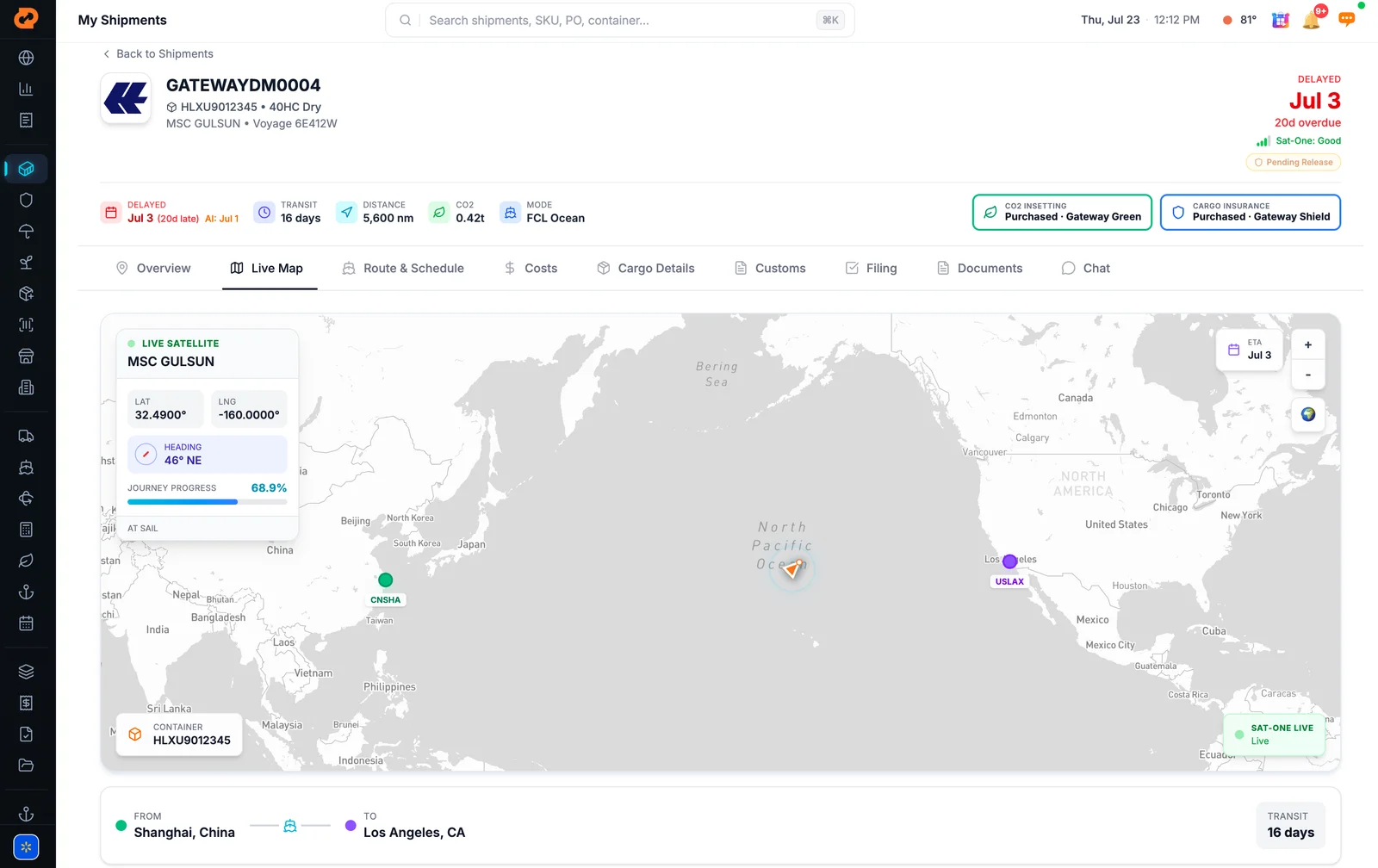
Every container on a live map, with the vessel's position and a predicted arrival.
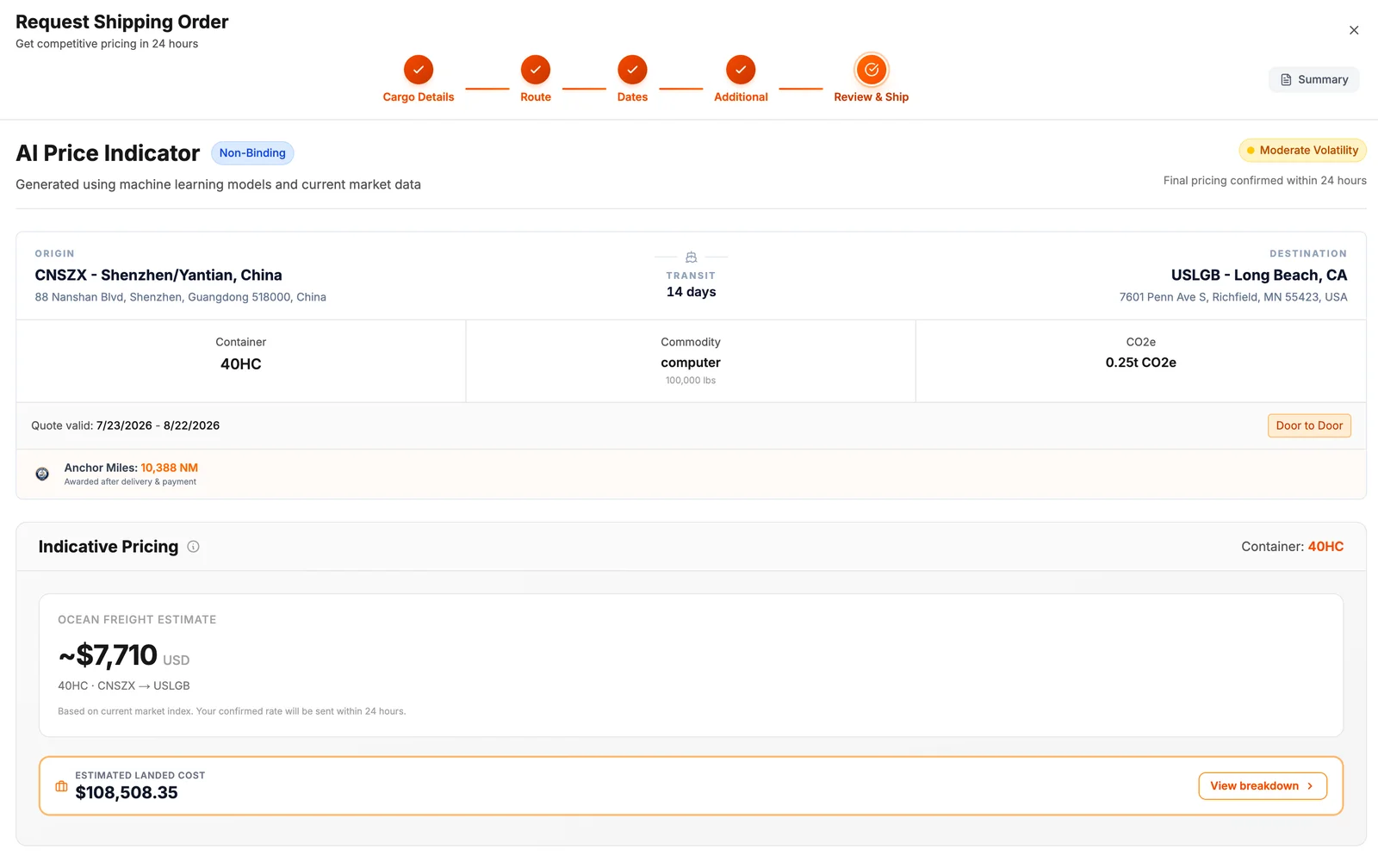
Booking in five steps, with the lane's market price shown before you submit.
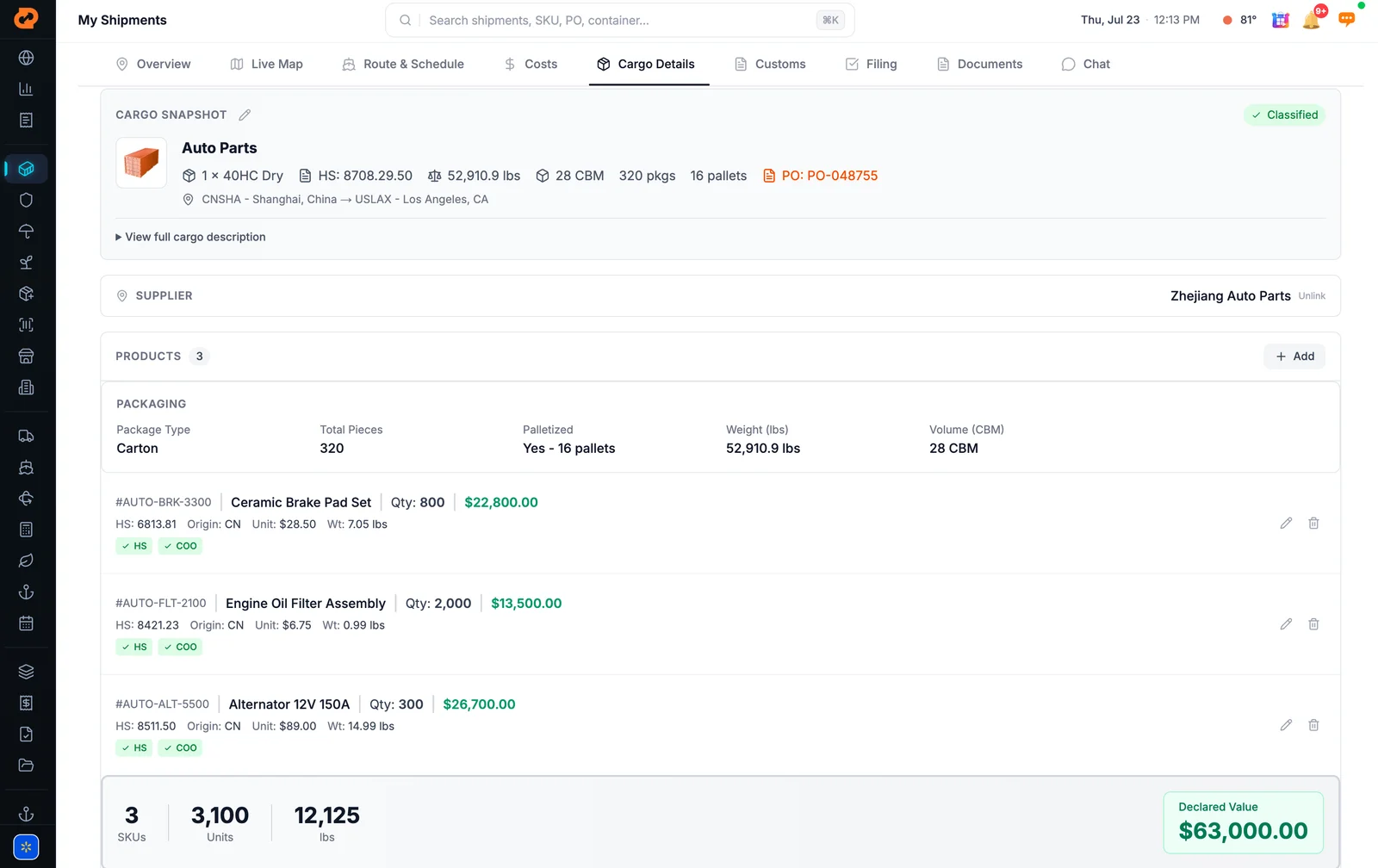
Cargo at the SKU level, classified by HTS code and ready for the entry.
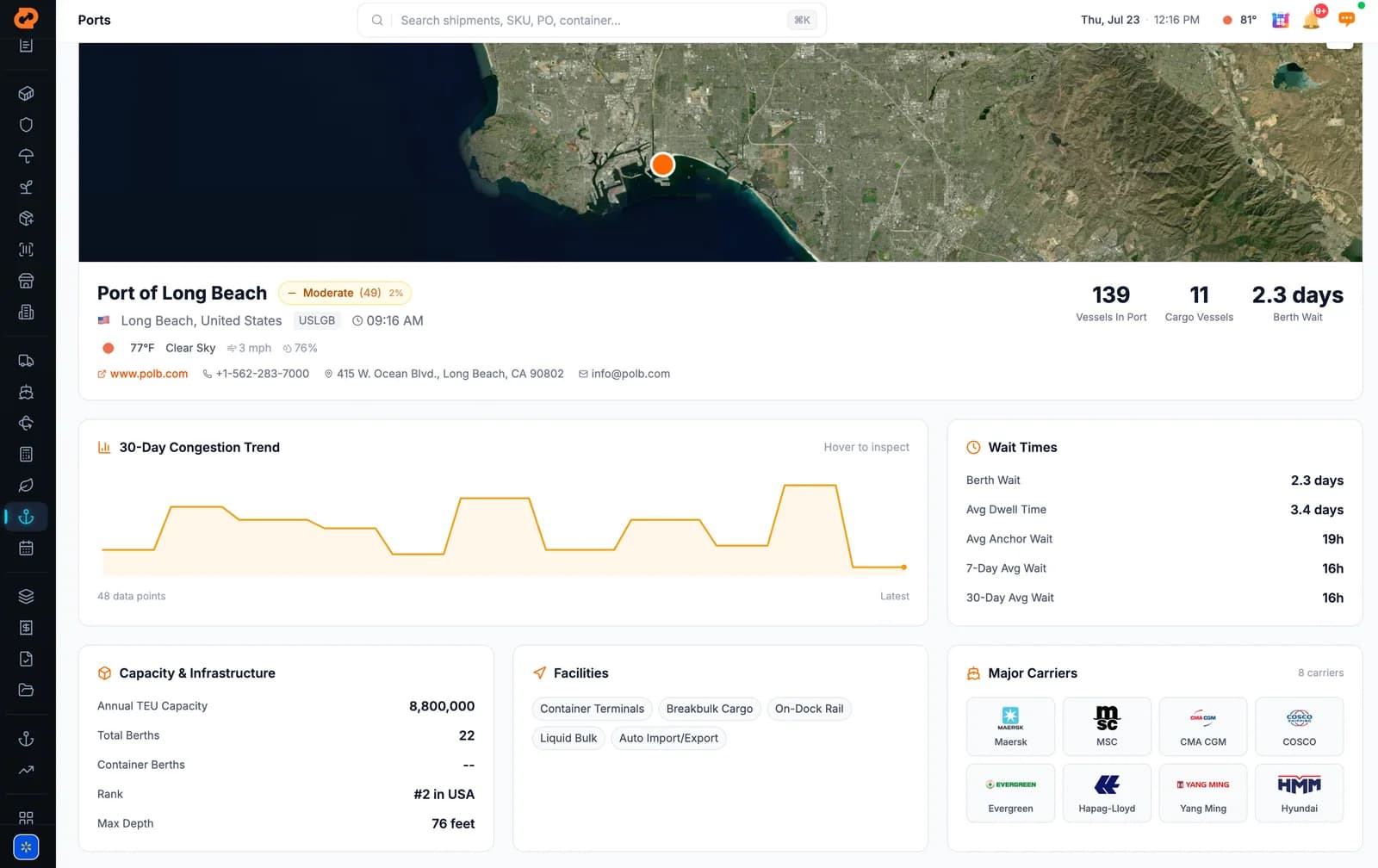
From the first mile to the last
Ready to ship?
Get a quote in minutes. No commitment, no signup required.
Questions? Email info@gatewaylines.com or call (844) 542-8392
From the blog
Gateway News Blog
Tariff changes, policy deadlines and market moves, written up the day they land.
Sep 24, 2026
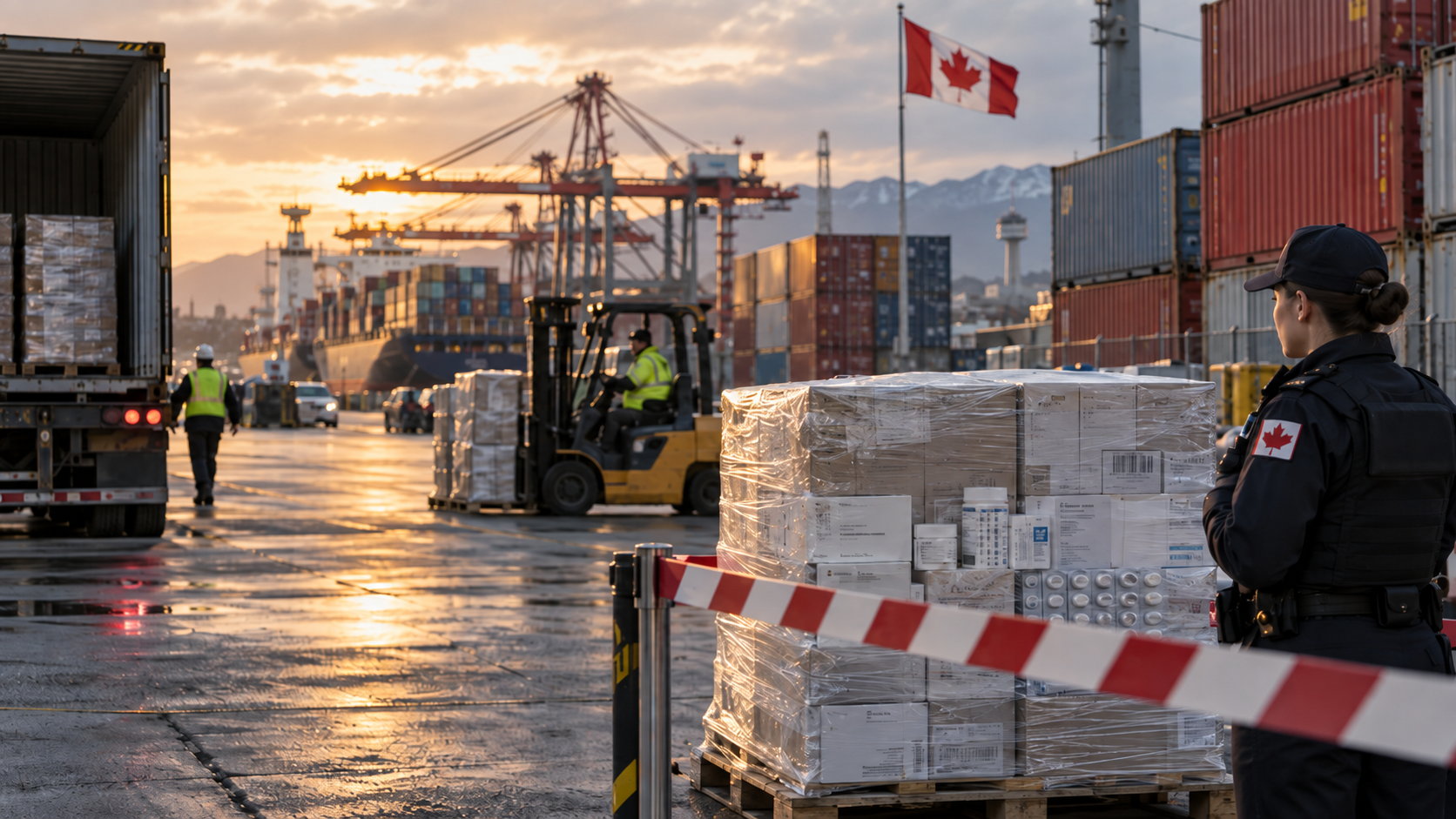
September 29, 2026: Canada Import Bans and a Wider Pharma Tariff
Two changes start on September 29, 2026: a US ban on 68 HTS lines of Canadian products, and the Section 232 pharmaceutical tariff for every importer. The ban turns on when goods are imported, the tariff on when they are entered. Here is what to check for cargo in transit.
Sep 18, 2026
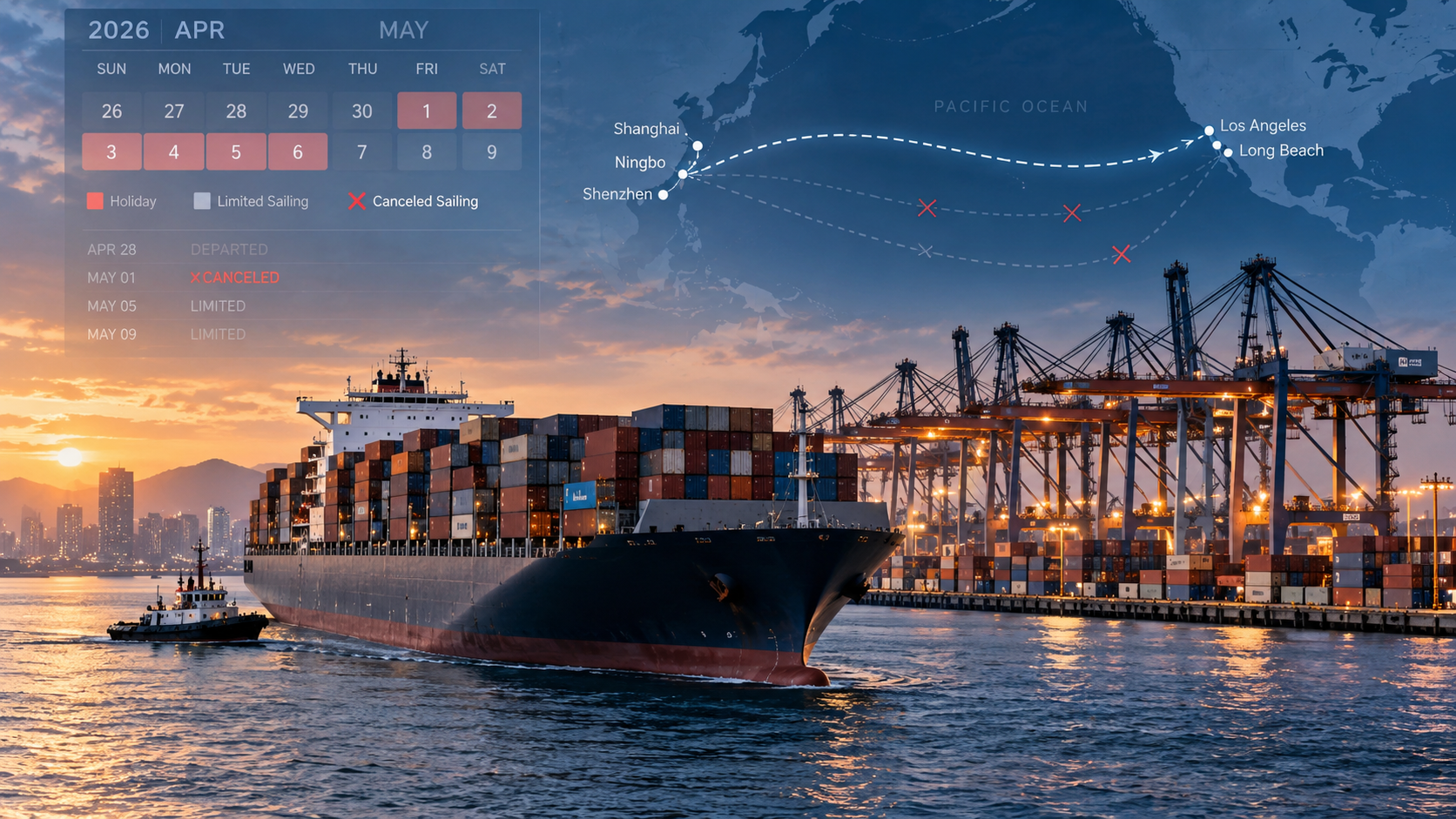
Golden Week 2026 Blank Sailings: Transpacific Space Is Tightening
Ocean carriers are pulling transpacific capacity ahead of China's Golden Week. Shanghai to Los Angeles hit $7,712 per 40ft on September 17, up 5 percent in a week, with nine blank sailings announced for the week after.
Sep 5, 2026
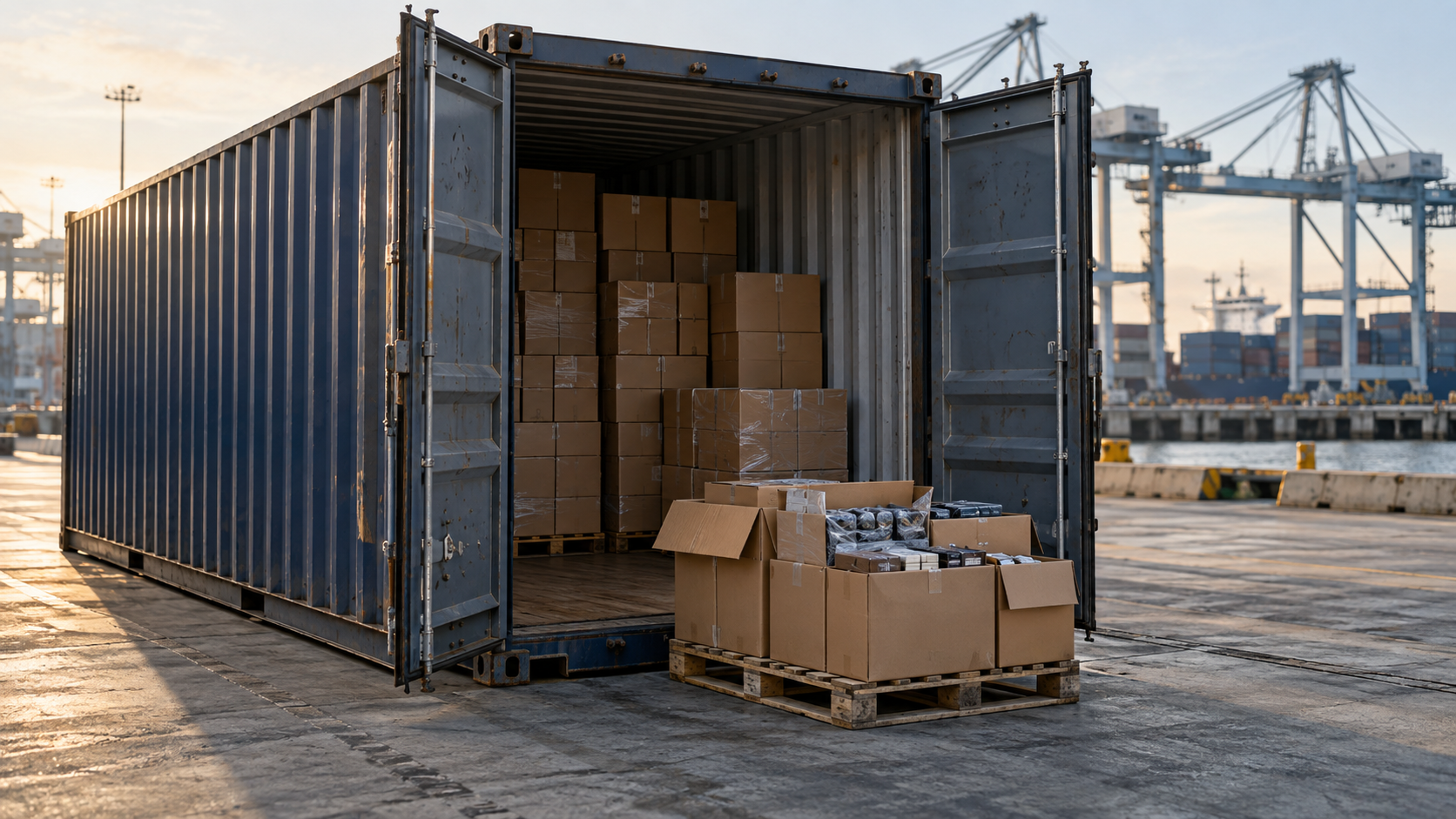
DDP From China: Why the Rates Are So Low, and Who Actually Pays When CBP Catches It
Chinese DDP quotes often price below the duty legally owed. Here is how the schemes work, why the U.S. buyer carries the liability, and what Executive Order 14411 changed on June 3, 2026.